Edgeone – Best real-time asset tracking Solutions company for smart warehouses

Home » What Is Edge AI? A Complete Guide for Businesses
Edge Computing
What Is Edge AI? A Complete Guide for Businesses
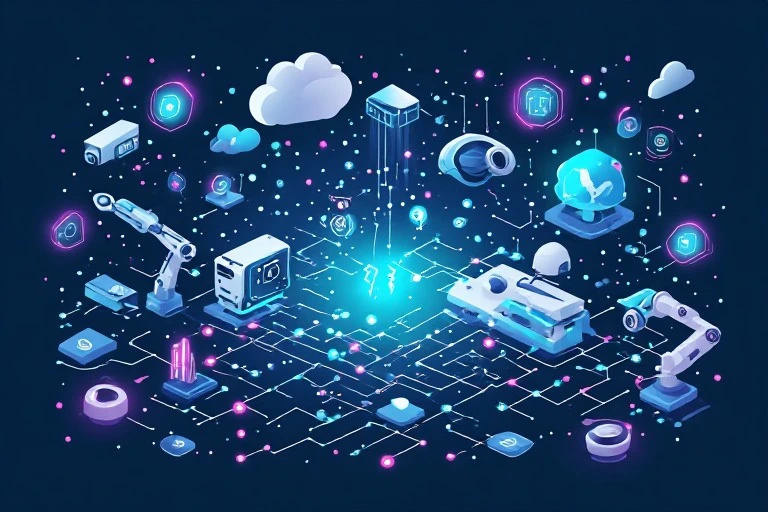
Artificial Intelligence has transformed the way businesses collect, process, and analyze data. However, traditional AI models often rely on cloud computing, where data is sent to remote servers before decisions are made. While this approach works well for many applications, it introduces latency, bandwidth costs, and privacy concerns.
This is where Edge AI computing changes the game.
Edge AI brings intelligence closer to where data is generated—whether that’s a factory floor, a hospital, a retail store, or a smart vehicle. Instead of waiting for cloud servers to process information, Edge AI enables devices to make decisions instantly.
From autonomous manufacturing to predictive maintenance and asset tracking systems, businesses across industries are adopting Edge AI to improve efficiency, reduce costs, and enhance customer experiences.
In this guide, we’ll explain what Edge AI is, how it works, its benefits, industry applications, and why it has become a critical technology for modern enterprises.
What Is Edge AI?
Edge AI refers to the deployment of Artificial Intelligence models directly on edge devices instead of relying solely on centralized cloud servers.
Edge devices include:
- Industrial computers
- AI gateways
- Smart cameras
- IoT sensors
- Robots
- Autonomous vehicles
- Medical devices
- Embedded systems
Instead of transmitting massive amounts of data to the cloud, Edge AI processes data locally, allowing businesses to make decisions in milliseconds.
For example, a manufacturing camera can instantly detect product defects without waiting for cloud analysis.
Understanding Edge AI Computing
Edge AI computing combines three technologies:
- Artificial Intelligence
- Edge Computing
- Internet of Things (IoT)
Here’s how it works:
Step 1: Data Collection
Every Edge AI system begins by collecting data from devices located at the edge of the network, such as IoT sensors, smart cameras, RFID readers, industrial machines, and connected equipment. These devices continuously capture information like temperature, movement, location, video, and machine performance. Since the data is gathered directly from the source, businesses receive accurate and up-to-date information that forms the foundation for intelligent decision-making.
Step 2: Local Processing
Instead of sending all collected data to a cloud server, Edge AI processes it locally on edge devices using pre-trained AI models. This allows the system to analyze information within milliseconds, reducing delays and minimizing internet dependency. Local processing also helps protect sensitive business data while lowering bandwidth usage and cloud computing costs.
Step 3: Instant Decision Making
Once the data has been analyzed, the AI model immediately makes decisions based on the detected patterns or predefined rules. It can identify equipment failures, detect defects, recognize objects, or trigger automated responses without human intervention. This real-time decision-making enables businesses to improve operational efficiency, reduce downtime, and respond to critical events much faster.
Step 4: Cloud Synchronization
After processing the data locally, only important insights, alerts, reports, or historical records are sent to the cloud for storage and further analysis. This approach avoids transferring large volumes of unnecessary raw data, making the system more efficient and cost-effective. Businesses can use the cloud to monitor operations across multiple locations, update AI models, and generate long-term performance reports while still benefiting from the speed of Edge AI.
Why Businesses Are Moving to Edge AI
Organizations generate enormous volumes of operational data every day. Processing everything in the cloud creates challenges such as:
- Network delays
- High bandwidth costs
- Privacy concerns
- Downtime caused by internet interruptions
Edge AI addresses these issues by processing data closer to the source.
Businesses benefit from:
- Real-time analytics
- Faster automation
- Reduced operational costs
- Better cybersecurity
- Improved reliability
How Edge AI Supports Asset Tracking
Modern businesses manage thousands of valuable assets across offices, factories, warehouses, and healthcare facilities. Without a reliable asset tracking system, locating equipment can become time-consuming and lead to unnecessary operational delays. Edge AI enhances asset tracking by processing location data in real time, allowing organizations to monitor assets continuously without relying solely on cloud connectivity.
By combining Edge AI with technologies such as RFID, Bluetooth Low Energy (BLE), Ultra-Wideband (UWB), and GPS, businesses can accurately track the movement of equipment and inventory. Intelligent algorithms can detect unusual movement, identify misplaced assets, and send instant alerts when equipment leaves designated areas. This helps reduce losses, improve asset utilization, and increase employee productivity.
Organizations using asset tracking software powered by Edge AI gain better visibility into their operations, enabling faster decision-making and more efficient resource management.
Edge AI and Real-Time Location Systems (RTLS)
A Real-Time Location System (RTLS) is a technology that enables businesses to determine the precise location of people, equipment, or assets in real time. When integrated with edge AI computing, RTLS becomes even more intelligent by processing location data locally and responding immediately to changes.
Instead of sending every location update to the cloud, Edge AI analyzes movement patterns directly on the edge device. This enables businesses to receive instant alerts for unauthorized asset movement, improve workflow efficiency, and optimize resource allocation. Industries such as healthcare, manufacturing, logistics, and retail use RTLS real time location system solutions to improve visibility and streamline daily operations.
By combining Edge AI with real time location tracking, organizations gain greater operational control while reducing network traffic and improving system performance.
The Future of Edge AI
The adoption of Edge AI is expected to grow rapidly as technologies such as 5G, Industrial IoT, robotics, autonomous vehicles, and smart infrastructure continue to evolve. Faster connectivity and more powerful edge devices will enable businesses to process increasingly complex AI workloads without relying heavily on centralized cloud servers.
Future Edge AI solutions will support advanced applications such as predictive maintenance, intelligent video analytics, autonomous robots, digital twins, and real-time automation across industries. As AI models become more efficient, businesses of all sizes will be able to deploy intelligent systems closer to their operations, improving speed, accuracy, and operational efficiency.
Organizations that invest in edge AI computing today will be better positioned to innovate, reduce costs, and remain competitive in an increasingly data-driven business environment.
Where Real-Time Intelligence Meets Business Impact.
Empower your operations with real-time visibility, intelligent automation, and edge computing built for modern enterprises.