Edgeone – Best real-time asset tracking Solutions company for smart warehouses

Home » How Edge Computing Supports Healthcare IoT Applications
Industrial IoT
How Edge Computing Supports Healthcare IoT Applications
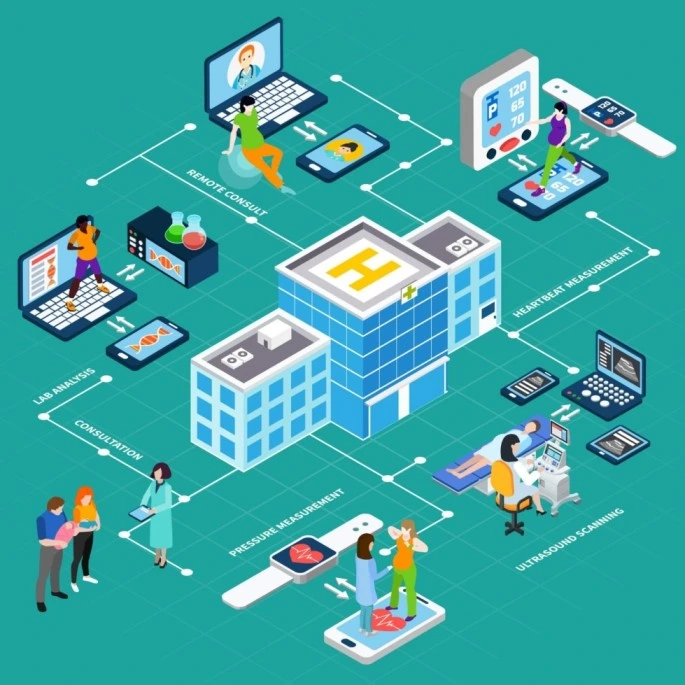
Walk into any modern hospital and you’ll notice something beyond the doctors, nurses, and medical equipment. Every department is connected through technology. Patient monitors record vital signs around the clock; infusion pumps deliver medication with precision, wearable devices collect health data, and medical equipment constantly exchanges information with hospital systems.
Every second, these connected devices generate an enormous amount of data. The challenge isn’t collecting information anymore. It’s turning that information into meaningful action quickly enough to support clinical decisions.
For many years, hospitals relied heavily on cloud computing to process this data. While the cloud continues to play an important role, it isn’t always the best option when immediate action is required. Sending information to a remote data center and waiting for a response can introduce delays that healthcare professionals simply cannot afford.
This is where edge computing is transforming healthcare. Instead of sending every piece of information to the cloud, edge computing processes data closer to where it is generated. The result is faster response times, greater reliability, and better support for clinical teams. As the iot of healthcare continue to expand, edge computing is becoming the technology that helps hospitals make smarter decisions in real time.
Why Hospitals Need Faster Decision Making
Hospitals operate every minute of every day. Emergency departments receive new patients; operating theatres perform critical procedures, and intensive care units continuously monitor patients whose conditions can change within seconds.
Imagine a patient in intensive care whose heart rhythm suddenly becomes irregular. If that data must travel to a cloud server before an alert is created, valuable time may be lost. With edge computing, the monitoring device processes the information immediately and alerts clinicians without unnecessary delay.
That difference may only be a few seconds, but in healthcare those few seconds can be life changing. This is one of the biggest reasons why the iot of healthcare is increasingly moving towards edge computing.
Turning Data into Immediate Clinical Action
Healthcare professionals don’t need more data. They need the right information at exactly the right time.
Edge computing allows connected devices to analyse patient information where it is created. Instead of waiting for cloud-based processing, clinicians receive alerts at the moment unusual readings are detected.
Whether monitoring heart rate, blood pressure, oxygen saturation, temperature, or respiratory activity, faster processing allows medical teams to respond sooner and make more confident clinical decisions.
Technology doesn’t replace healthcare professionals. It simply gives them quicker access to information that supports better patient outcomes.
Building a Smarter Hospital Environment
Modern hospitals depend on hundreds of systems working together. Patient admissions, bed management, operating theatres, laboratories, pharmacies, environmental controls, and clinical teams all need access to accurate information.
A smart hospital management system brings these operations together into one connected environment.
Rather than treating every department as an isolated system, a smart hospital management system enables information to flow securely across the hospital. Edge computing processes that information locally, allowing departments to communicate faster while reducing dependence on constant cloud connectivity.
For example, staff can instantly identify available beds; maintenance teams can receive immediate notifications about equipment issues, and emergency alerts can reach the right departments within seconds.
The result is a smart hospital management system that improves operational efficiency while helping clinicians focus on patient care instead of administrative tasks.
Helping Medical Devices Become More Intelligent
Medical equipment today does much more than perform a single function. Patient monitors, ventilators, infusion pumps, imaging systems, and diagnostic devices constantly generate operational and clinical information.
Edge computing allows these devices to analyze their own performance in real time. Instead of waiting until a fault causes downtime, hospitals can identify early warning signs and schedule maintenance before equipment becomes unavailable.
This approach also supports medical device quality management systems by providing continuous monitoring, automated performance records, and accurate maintenance histories.
With stronger medical device quality management systems, healthcare organizations can improve equipment reliability, simplify compliance, support regulatory audits, and maintain higher standards of patient safety.
As hospitals continue to modernize, medical device quality management systems supported by edge computing are becoming an important part of maintaining dependable healthcare infrastructure.
Improving Equipment Visibility Across the Hospital
Every hospital faces the same challenge. Staff spend valuable time searching for equipment that should already be available.
A missing infusion pump, wheelchair, portable ultrasound machine, or ECG monitor can delay patient care and increase unnecessary stress during busy shifts.
This is where asset and inventory management software provides immediate value.
Using RFID, connected sensors, and edge computing, asset and inventory management software allows hospitals to see the location and availability of equipment in real time.
Instead of manually searching for multiple departments, clinical teams can quickly locate the equipment they need.
Beyond equipment tracking, asset and inventory management software helps hospitals:
- Improve inventory accuracy
- Reduce unnecessary equipment purchases
- Minimise asset loss
- Increase equipment utilisation
- Lower operational costs
By giving hospitals complete visibility over their resources, asset and inventory management software allows healthcare professionals to spend more time caring for patients and less time managing equipment.
Supporting the Next Generation of Healthcare
Healthcare technology continues to evolve at an incredible pace.
Artificial intelligence, predictive analytics, remote patient monitoring, connected diagnostics, and digital health platforms are becoming part of everyday clinical practice. As the iot of healthcare continues to grow, hospitals will generate far more information than traditional systems were ever designed to handle.
Edge computing provides the foundation needed to support this growth. By processing information locally, hospitals can continue expanding connected healthcare services without sacrificing speed, reliability, or patient safety.
It enables organizations to adopt new digital technologies while maintaining the performance clinicians depend on every day.
Final Thoughts
Healthcare is no longer defined only by medical expertise. It is increasingly supported by technology that helps clinicians make faster, better-informed decisions.
Edge computing is making connected hospitals more responsive by reducing delays, improving device performance, and enabling real-time insights where they matter most.
Whether supporting a smart hospital management system, strengthening medical device quality management systems, expanding the iot of healthcare, or improving hospital operations through asset and inventory management software, edge computing is becoming a critical part of modern healthcare infrastructure.
Hospitals investing in these technologies today are building a stronger foundation for safer patient care, more efficient operations, and a more connected healthcare future.
Ready to Build a Smarter Healthcare Environment?
Technology should simplify healthcare, not make it more complicated.
At Edge One Computing, we help healthcare organizations modernise hospital operations with intelligent edge computing solutions that improve visibility, speed up decision making, and support connected care.
Whether you’re implementing a smart hospital management system, enhancing medical device quality management systems, expanding the iot of healthcare, or deploying asset and inventory management software, our solutions are designed to meet the real-world demands of today’s hospitals.
Speak with our experts and discover how Edge One Computing can help you build a faster, smarter, and more connected healthcare environment.
FAQs
Edge computing processes healthcare data close to where it is generated, such as patient monitors and medical devices. This enables faster decision making, reduces delays, and improves the quality of patient care.
The iot of healthcare benefits from edge computing through real-time data processing, quicker clinical alerts, improved device performance, reduced network dependency, and better support for connected healthcare environments.
A smart hospital management system connects hospital departments, medical devices, and operational workflows into one intelligent platform. It improves patient flow, bed management, equipment visibility, and overall hospital efficiency.
Medical device quality management systems Help hospitals monitor equipment performance, maintain compliance, schedule preventive maintenance, and improve patient safety by ensuring medical devices remain reliable throughout their lifecycle.
Asset and inventory management software enables hospitals to track medical equipment in real time, improve inventory accuracy, reduce equipment loss, optimize resource utilization, and support faster patient care.
Table of Contents
Where Real-Time Intelligence Meets Business Impact.
Empower your operations with real-time visibility, intelligent automation, and edge computing built for modern enterprises.