Edgeone – Best real-time asset tracking Solutions company for smart warehouses

Home » The Role of Edge Computing in Building Smart Industrial Operations
Smart Industries
The Role of Edge Computing in Building Smart Industrial Operations
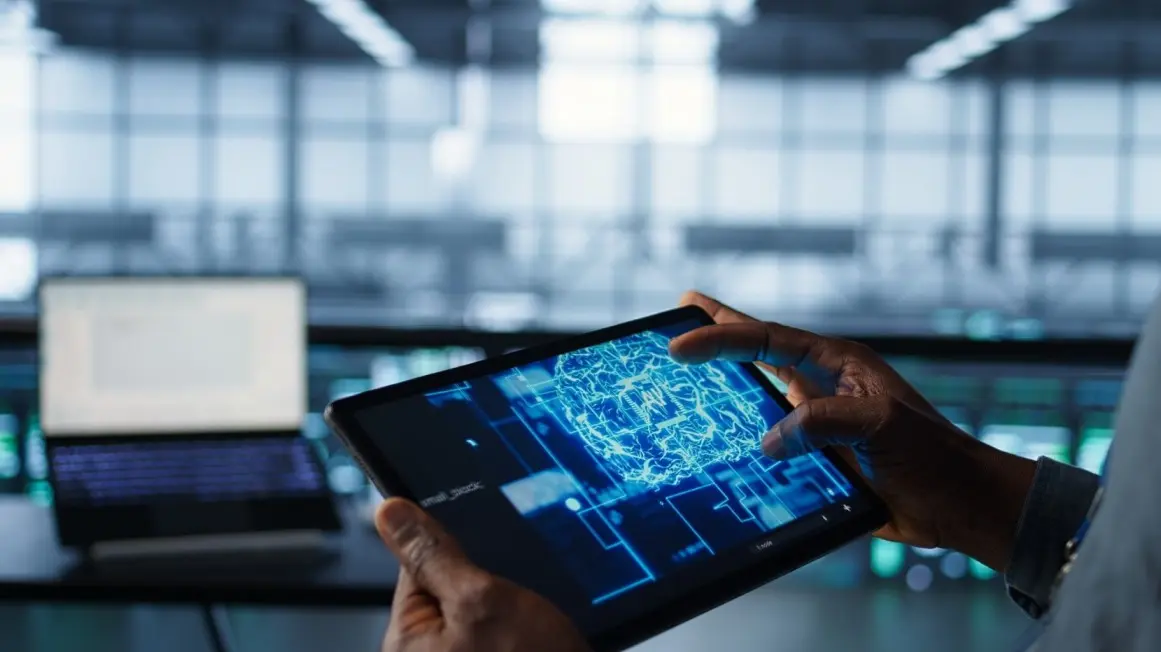
Modern industries are becoming more connected every day. Machines, sensors, equipment, vehicles, and industrial assets are generating enormous amounts of data. While this data can help businesses improve productivity and make better decisions, collecting it is only the first step. Organizations also need to process and act on that information quickly.
This is where edge computing is important.
The combination of IoT and edge computing is helping businesses build smarter, faster, and more responsive industrial operations. Instead of sending every piece of information to a centralized cloud platform, edge computing allows organizations to process data closer to where it is generated.
For industries moving toward Industry 4.0, this approach can improve real-time monitoring, asset visibility, automation, and operational efficiency.
What Is Edge Computing?
Edge computing is a distributed computing approach that processes data closer to the source where it is generated.
In a traditional cloud environment, information collected from machines, sensors, and connected devices is sent to a remote data center for processing. The results are then sent back to the application or user. While cloud computing remains highly valuable, this process may introduce delays for applications that require immediate responses.
An edge network brings computing and data processing closer to connected devices and industrial environments.
For example, consider a manufacturing facility with hundreds of machines continuously generating information about temperature, production levels, equipment performance, and operating conditions. Instead of sending all this information to the cloud before processing it, edge devices can analyze important data locally.
This allows businesses to identify events and respond faster.
Understanding Edge Computing and IoT
The relationship between edge computing and IoT is particularly important for modern industrial operations.
The Internet of Things connects physical devices, machines, sensors, and assets to digital systems. These connected devices continuously collect information from their surrounding environment.
However, connecting thousands of devices can create a huge volume of data.
This is where edge computing adds another layer of intelligence.
IoT devices collect the data, while edge computing helps process that data closer to its source. Important information can be analyzed locally, while selected data can be transferred to cloud platforms for centralized storage, reporting, and long-term analytics.
A simplified process looks like this:
IoT devices → Data collection → Edge processing → Real-time insights → Business action
This approach allows businesses to move beyond simply collecting data and start using it to improve everyday operations.
Why IoT and Edge Computing Matter for Smart Industries
Smart industrial operations depend heavily on real-time information.
A manufacturing manager may need to know whether a machine is operating normally. A warehouse manager may need to locate a particular asset. A maintenance team may need to identify equipment showing unusual behavior.
In each of these situations, access to information at the right time is important.
By combining IoT and edge computing, organizations can create systems capable of collecting and processing operational information closer to where activities take place.
This can help businesses achieve:
- Faster access to operational information
- Reduced latency for time-sensitive applications
- Better visibility across connected assets
- More responsive industrial automation
- Improved equipment monitoring
- Reduced dependence on continuous cloud connectivity
- More efficient use of network resources
The result is a more connected and responsive industrial environment.
Improving Real-Time Industrial Monitoring
Industrial facilities often contain machines and equipment that need continuous monitoring.
Traditional monitoring systems may rely heavily on centralized infrastructure. When data needs to travel to a remote server before being processed, there can be delays between an event occurring and an appropriate response.
An edge network helps move processing closer to the industrial environment.
For example, sensors connected to a machine can continuously collect information about temperature, vibration, pressure, or operating conditions. An edge system can process this information locally and identify unusual conditions.
If a predefined threshold is reached, the system can generate an alert or trigger an appropriate response.
This can help businesses improve operational visibility without requiring every piece of data to travel to a remote cloud platform first.
Supporting Predictive Maintenance
Unexpected equipment failure can be expensive for industrial organizations. Production interruptions can affect productivity, maintenance schedules, customer deliveries, and operating costs.
The combination of edge computing and IoT can support more proactive maintenance strategies.
IoT sensors can continuously collect information from industrial equipment. Edge systems can process this information locally and identify patterns that may indicate potential equipment problems.
For example, unusual vibration or temperature changes could indicate that a machine requires inspection.
Instead of waiting until equipment fails, maintenance teams can use these insights to investigate potential problems earlier.
This can help organizations reduce unplanned downtime and make maintenance activities more predictable.
Edge computing does not replace maintenance teams or cloud-based analytics. Instead, it provides an additional processing layer that allows important information to be identified closer to the equipment.
Enabling Smarter Asset Tracking
Industrial businesses often manage large numbers of tools, machines, vehicles, equipment, and other valuable assets.
Finding the right asset at the right time can become difficult when operations span large factories, warehouses, campuses, or multiple facilities.
IoT-enabled asset tracking can provide organizations with better visibility in asset locations and movements.
When combined with edge computing, asset information can be processed closer to the operational environment. Technologies such as RTLS, RFID, GPS, and IoT sensors can provide information about where assets are located and how they are being used.
For example, if a technician needs a particular piece of equipment, a connected tracking system can help identify its current location rather than requiring employees to search manually.
This can reduce search time, improve asset utilization, and help organizations make better use of their existing resources.
Reducing Network Dependency
Industrial environments can generate significant amounts of data every second.
Sending every piece of raw information to the cloud can increase network traffic and create unnecessary dependency on continuous connectivity.
An edge network can help address this challenge by processing relevant information locally.
Instead of transferring everything to a centralized platform, an edge system can determine which information requires immediate action and which information can be transferred later.
This can reduce unnecessary data movement while allowing critical applications to continue functioning more efficiently.
This approach can be particularly useful for industrial environments where connectivity may be limited, expensive, or unreliable.
Improving Data Management and Control
Industrial organizations often handle operational information that needs to be carefully managed.
The edge computing internet of things approach allows organizations to process certain types of IoT data closer to where it is generated.
Rather than transferring all information outside the local environment, organizations can determine which data should be processed locally and which information should be sent to centralized systems.
This can provide greater control over data flows and help organizations design a more efficient technology environment.
Of course, edge computing is not a replacement for cybersecurity. Strong access controls, encryption, network security, device management, and monitoring are still essential for protecting connected industrial environments.
Supporting Industrial Automation
Automation is a major part of modern smart industries.
Manufacturing facilities, warehouses, logistics operations, and other industrial environments increasingly use connected systems to monitor processes and automate repetitive activities.
Many automation applications require quick responses.
This is another area where IoT and edge computing can work together effectively.
IoT devices can collect information from machines and the surrounding environment, while edge systems can process that information locally and support faster responses.
For example, an edge-enabled system could detect a specific machine condition and trigger an automated workflow without waiting for information to travel to a remote cloud platform and return.
This can help create more responsive and efficient industrial operations.
Edge Computing and Industry 4.0
Industry 4.0 is changing the way businesses approach industrial operations.
The goal is not simply to connect more machines. It is to create intelligent environments where machines, people, assets, software, and data work together.
The edge computing internet of things ecosystem can play an important role in this transformation.
A modern smart industrial environment may combine:
- Industrial IoT for collecting operational data
- Edge computing for local data processing
- RTLS for real-time location visibility
- Asset tracking for equipment management
- Cloud platforms for centralized analytics
- Automation for improving workflows
- AI and analytics for identifying patterns
- Enterprise software for managing business operations
When these technologies work together, businesses can gain better visibility into their operations and respond to changes more effectively.
Edge Computing Does Not Replace the Cloud
It is important to understand that edge computing and cloud computing are not competing technologies.
In many industrial environments, they work best together.
Edge computing can handle applications that require fast local processing, while cloud platforms can provide centralized storage, advanced analytics, reporting, and long-term data management.
For example, an industrial facility could process machine data locally through an edge device and send selected information to the cloud for historical analysis.
This creates a hybrid architecture where the edge handles time-sensitive workloads while the cloud supports broader business intelligence.
Building the Future of Smart Industrial Operations
The move toward smart industries is ultimately about solving real business challenges.
Organizations want to reduce downtime, improve productivity, increase asset utilization, monitor equipment more effectively, and make faster operational decisions.
The combination of edge computing and IoT provides an important foundation for achieving these goals.
As more machines, sensors, and assets become connected, businesses will continue to generate larger volumes of operational data. Organizations that can process this information efficiently and turn it into timely action will be better positioned to build intelligent and competitive operations.
Conclusion
Edge computing is becoming an important technology for businesses looking to modernize industrial operations.
By bringing data processing closer to connected machines, assets, and sensors, organizations can improve real-time monitoring, support predictive maintenance, enhance asset visibility, enable automation, and reduce network dependency.
The combination of IoT and edge computing can help transform traditional industrial environments into connected and intelligent operations.
The future is not simply about collecting more data. It is about processing the right information at the right place and turning it into action at the right time.
Build Smarter Industrial Operations with EdgeOne Computing
Ready to move toward more connected, responsive, and intelligent industrial operations? Edge One Computing helps businesses leverage edge computing, Industrial IoT, real-time asset tracking, RTLS, and intelligent monitoring to create smarter connected environments.
Explore how Edgeone Computing can help your business build the next generation of smart industrial operations.
FAQs
Edge computing processes data closer to where it is generated, such as machines, sensors, and industrial equipment. This enables faster data processing and real time responses.
Edge computing and IoT work together by allowing IoT devices to collect operational data while edge systems process important information closer to the source. This can reduce latency and improve real time decision making.
IoT and edge computing can help businesses improve real time monitoring, asset visibility, automation, equipment performance, operational efficiency, and responsiveness.
An edge network connects devices, sensors, and computing resources closer to where data is generated. It allows industrial data to be processed locally instead of relying entirely on a centralized cloud platform.
Edge computing and cloud computing serve different purposes. Edge computing is useful for time-sensitive processing close to industrial equipment, while cloud platforms are valuable for centralized storage, analytics, reporting, and long-term data management.
Table of Contents
Where Real-Time Intelligence Meets Business Impact.
Empower your operations with real-time visibility, intelligent automation, and edge computing built for modern enterprises.